ICP vs buyer persona for product marketing: how to write messaging
ICP is the ideal account; buyer persona is the role inside it. Comparison tables, messaging matrices, and a practical worksheet.

Niloofar Karimi
Product positioning, messaging, and content for product growth—aligned with product and sales.
September 7, 2026 · 8 min read
Also available in فارسی
Direct answer
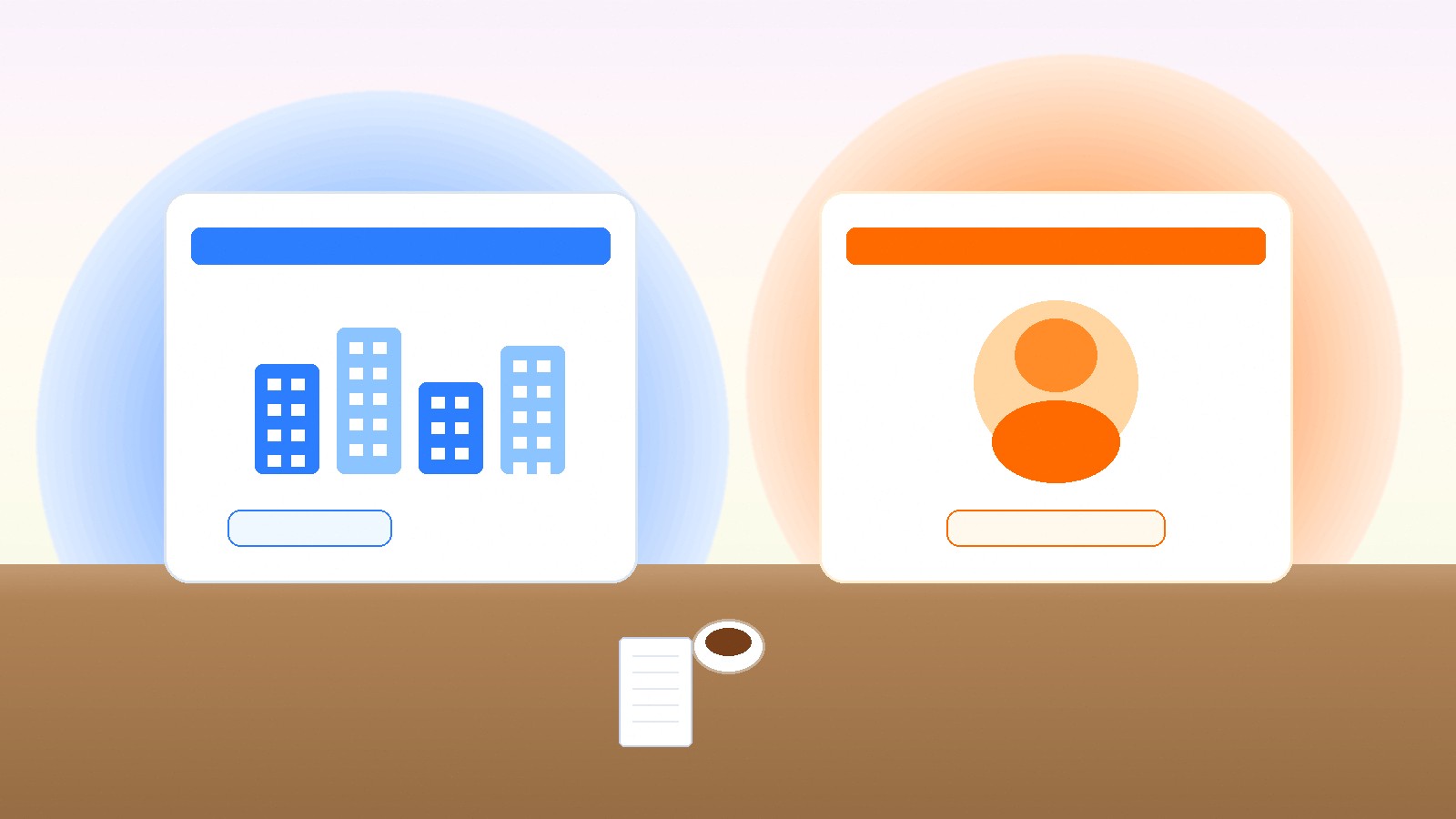
An Ideal Customer Profile (ICP) describes the account you win with: industry, size, business model, data readiness, budget, and the conditions that predict successful adoption and retention.
A buyer persona describes the people/roles inside that account: pains, KPIs, objections, language, and the channels that matter for messaging.
One practical line: ICP decides where to hunt; personas decide how to talk. Treat a persona as an ICP and you personalize for people whose company cannot buy. Treat an ICP as a persona and you send generic copy to the right companies.
What is an ICP vs a buyer persona?
| Question | ICP | Buyer Persona |
|---|---|---|
| Unit of analysis | Account / organization | Individual / role |
| Dominant data | Firmographics + operating conditions | Pains, motives, objections, channel habits |
| Core question | Is this company worth selling to—and will it succeed? | Why and how does this role decide? |
| Natural output | Target lists, lead scoring, sales motion | Messaging brief, tone, benefit angle |
| Failure mode | “All ecommerce” with no success filter | Fictional personas with no real interviews |
A working ICP definition (for product marketing)
An ICP is a testable description of accounts that achieve your promised outcome with low friction, sensible willingness to pay, and acceptable retention — not a slide titled “mid-market innovators.”
Useful layers:
- Structural fit: industry, team/revenue band, geography, business model
- Environmental fit: event-data quality, implementation capacity, current stack, process maturity
- Situational fit (why now): buying triggers (new leader, channel-cost pressure, order growth), 90–180 day outcomes
A working buyer-persona definition
A persona is a semi-fictional, evidence-based picture of buying-committee roles: economic buyer, technical evaluator, day-to-day user, sometimes legal/security. For each role, capture job goals, fears, recurring objections, required proof, and preferred channels (landing, nurture email, demo, LinkedIn).
Why MarTech teams blur the two
Marketing automation products share vocabulary; buyers sit through demos weekly. Without a clear ICP, segments and campaigns drift toward “anyone with an email.” Without personas, one hero tries to serve every role and benefits go soft.
Symptoms of the mix-up:
- Marketing sends MQLs; sales says “not a fit” (weak or ignored ICP)
- The landing speaks to a marketing lead; the technical evaluator stalls (incomplete personas)
- Content builds beautiful personas for accounts that lack budget or event data
Correct sequence: ICP first → committee personas → messaging and channels.
Comparison table for product messaging
| Dimension | Decided by ICP | Decided by persona |
|---|---|---|
| Comparison-page focus | Which vertical and company size | Which role reads first |
| Proof | Same-size / same-industry case | Metric or story tied to that role’s KPI |
| Objection | “Implementation is heavy for a 2-person team” (account) | “I don’t have time to build journeys” (role) |
| CTA | Demo matched to the account’s sales motion | Role-native CTA (workshop, technical doc, pricing) |
| Disqualify | No event data / zero channel budget | Wrong role in the funnel (curious student) |
How to write messaging from ICP + persona (step by step)
1) Write a one-page ICP
- Segment name (clear, not poetic)
- Firmographics
- Promised outcome
- Success prerequisites (events, team, channels)
- Disqualifiers
- “Why now” triggers
2) Build 2–4 committee personas
Minimum: economic buyer, campaign/lifecycle operator, technical/data evaluator. For each: one benefit sentence and one primary objection.
3) Messaging matrix: ICP × persona
| Persona row / angle | Pain | Benefit | Supporting feature | Channel |
|---|---|---|---|---|
| Store marketing lead | SMS budget burns | Only relevant audiences | Behavioral segments + exit on purchase | Hero + email |
| Campaign operator | Copy-paste and missed exits | Faster launches, fewer mistakes | Templates + multi-step journeys | Educational email |
| Technical / RevOps | Messy events | Auditable rules | Stable events + segments | Technical page / demo |
4) Benefit-led sentence formula
[Benefit for this persona in this ICP] — with [real capability], without [old pain].
Examples for ICP “online stores with a small marketing team”:
- Lead: “Stop post-purchase nagging — with journeys and exit rules.”
- Operator: “Call one template from several paths — speed without quality drop.”
- Technical: “Bind segments to real events — not a stale blast list.”
5) Pre-publish checks
- Is this page primarily for one persona?
- Is the reader’s account inside the ICP?
- Does the claimed feature actually exist? (events, segments, journeys, email, SMS)
Practical product-marketing examples (MarTech)
Example A — landing hero
- Weak: “Marketing automation for every business.” (no ICP, no persona)
- Better with ICP: “For stores and SaaS teams that already track purchase and cart events.”
- Strong with ICP + persona: “For store marketing leads who want SMS only for cart abandoners — and a hard stop after purchase.”
Example B — nurture email
Write the subject for the persona (“Why blast lists burn SMS budget”), but build the send list with ICP filters (target verticals/company size). Persona copy on non-ICP accounts wastes budget.
Example C — demo script
- Confirm account fit (ICP)
- Discover the present role’s pain (persona)
- State that role’s benefit
- Show events → segments → journeys → email/SMS
- Confirm an observable outcome
One-week worksheet for content and sales
| Day | Work | Output |
|---|---|---|
| 1 | List 10 won and 10 lost accounts | Win/loss patterns |
| 2 | Write disqualifiers | ICP v1 page |
| 3 | Three short sales/CS interviews | Real personas |
| 4 | Benefit matrix per persona | Messaging brief |
| 5 | Rewrite hero + one email | Critique-ready draft |
| 6 | Review with sales | Angle fixes |
| 7 | Lock version; tag “for which ICP/persona” | Controlled publish |
Truthful Leadara mapping (events, segments, journeys, email/SMS)
Leadara is a marketing automation platform. ICP and persona are not product modules, but they shape how you run messaging:
- Events create behavioral truth; without stable events, “ideal” segments float.
- Segments can encode operational ICP-like rules (e.g. purchased in 30 days, or abandoned cart with no purchase) — they do not replace a strategic ICP document.
- Journeys sequence messages for the brand’s end-customer situations (welcome, cart, win-back) with waits and exits.
- Email and SMS deliver the benefit-led line; persona tone lives in the template, audience comes from the segment.
What we do not claim: Leadara is not a magic “auto-generate ICP” or full “AI persona studio” product. Strategy stays with product marketing and sales; Leadara executes behavior-based messaging afterward.
Common mistakes
- Fictional personas without sales and support evidence
- One ICP stretched across five unrelated verticals
- Benefits aimed at the wrong role on the primary landing page
- Treating a blast list as “the whole ICP” without behavioral rules
- Ignoring disqualifiers (accounts with no event data that still want a demo)
- Never refreshing the ICP when churn or sales cycle changes
FAQ
Is an ICP the same as a persona?
No. ICP is account fit and success likelihood. A persona is individual messaging context inside the account.
Which should we build first?
Usually the ICP. Personas for the wrong accounts produce polished content that does not convert.
How many ICPs and personas are enough?
Often 1–3 primary ICPs and 2–5 personas for the buying committee. More usually means strategy is still fuzzy.
Does ICP matter in B2C?
Yes — often as an ideal customer / high-value segment profile rather than a company account. Personas still cover roles or behavioral archetypes.
How do we use ICP in lead scoring?
Weight firmographic and behavioral signals tied to success prerequisites. Personas influence nurture paths and follow-up content more than the first fit score.
Do we need a separate landing page per persona?
Not always. One primary landing with the dominant persona angle plus sections or secondary pages for other roles is usually more practical.
Who owns the ICP — sales or marketing?
Joint ownership: marketing and sales with product and Customer Success input. Without win/loss and churn data, the ICP stays aspirational.
How should SMS use ICP vs persona?
Filter recipients with ICP/behavior-like rules; write the short copy with that persona’s benefit. SMS is not for feature dumps.
Bottom line and next step
ICP filters accounts; buyer personas power the message. In product marketing — especially for MarTech and eCRM buyers — the winning order is: define the right accounts, map the roles, write benefit-led copy, then execute with events, segments, journeys, email, and SMS.
Suggested next step: lock one ICP page and a three-persona matrix this week; then rewrite only one hero and one nurture email against that matrix and ship them.