What is customer segmentation in marketing automation?
A plain definition of customer segments, live audiences vs static lists, and practical examples for journeys.

Sara Moradi
Designs customer journeys and marketing automation campaigns for retention and lower churn.
September 6, 2026 · 1 min read
Also available in فارسی
What is customer segmentation?
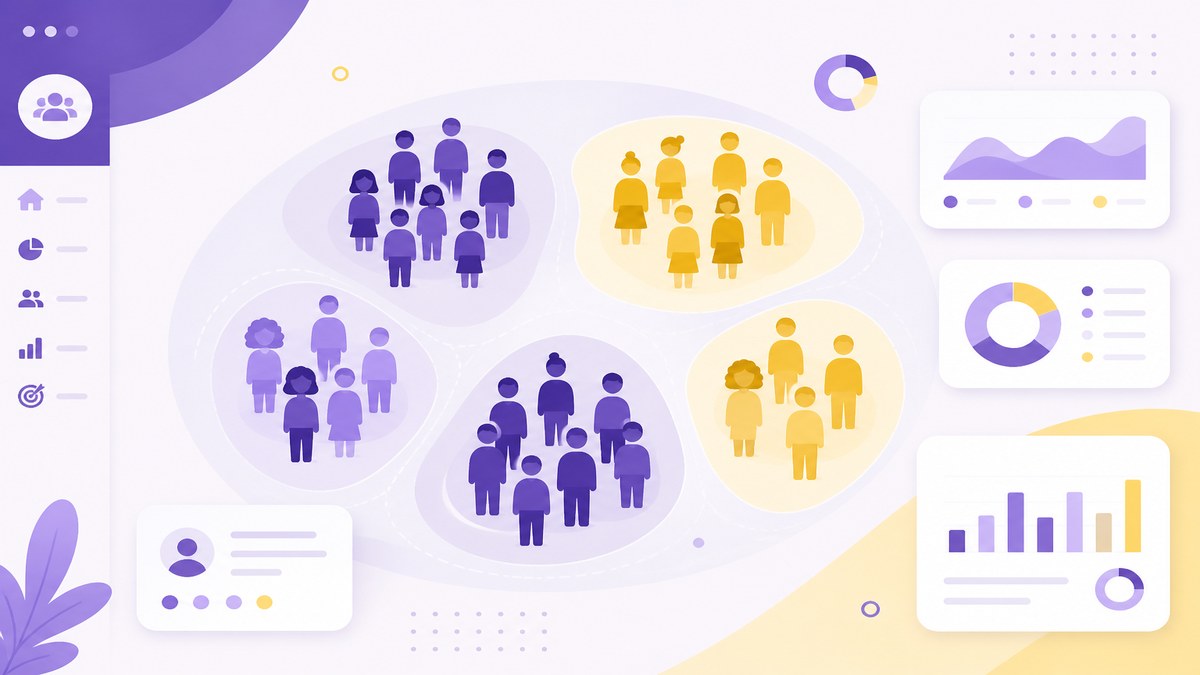
Customer segmentation groups people by shared traits or behaviors so each group gets a relevant message — not one blast for everyone.
In marketing automation, a segment is usually a live audience: membership updates as events and traits change.
Segment vs static list
| Static list | Live segment |
|---|---|
| Ages quickly | Stays current with events |
| Fine for one-off blasts | Built for recurring journeys |
| Weak exit logic | Natural fit for “bought → leave” |
Common segment types
Behavioral, trait-based, lifecycle, lead-score bands, and manual lists.
High-intent examples
Abandoned cart without purchase; signed up but inactive; one-time buyers gone quiet; opened email but no click (if you track it).
How to write a good segment
Explain it in one sentence, keep AND/OR clear, stabilize event names, check size, and always pair journeys with a conversion exit.
In Leadara
Leadara audiences support trait/event/lifecycle/manual/lead-score filters with AND/OR, CSV export, and journey targeting for email/SMS/web push.
FAQ
Start with 2–3 revenue segments. Personas are stories; segments are executable rules. Wire events first, then segment, then a one-message journey.
Bottom line
Segmentation is right group + living rules + relevant message. Without it, journeys are just scheduled spam.