What is marketing automation? A plain definition, use cases, and common mistakes
A clear definition of marketing automation, how it differs from bulk email, and practical journeys like abandoned cart.

Sara Moradi
Designs customer journeys and marketing automation campaigns for retention and lower churn.
September 6, 2026 · 3 min read
Also available in فارسی
What is marketing automation?
Marketing automation is software that runs repetitive, behavior-based marketing work for you: welcome messages, abandoned-cart reminders, win-backs, lead scoring, audience segmentation, and campaign measurement.
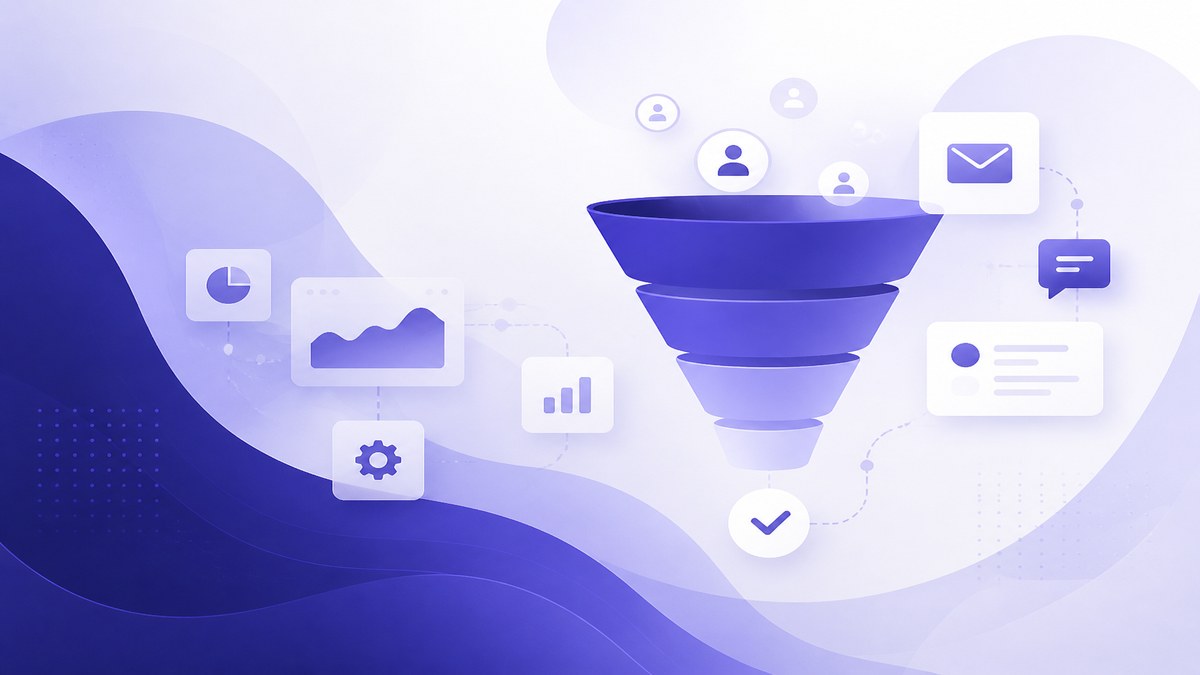
In plain terms: instead of blasting one message to a list, the system watches events (what people did) and decides who gets which message on which channel.
What it is not
- Not “bulk email or SMS only”
- Not a full replacement for sales or support teams
- Not AI copy alone — without behavioral data, automation is blind
If you only have a phone list and one static text, that is a blast — not behavior-based automation.
Core building blocks
1. Events
Actions people take: page view, signup, add to cart, purchase, email open.
2. Segments / audiences
Living lists with rules — e.g. “abandoned cart in the last 24 hours and no purchase yet.”
3. Journeys
Conditional paths: wait → send → exit on purchase → otherwise next touch.
4. Channels
Commonly email, SMS, web/app push, and on-site messages. In Iran, SMS often carries the fast reminder.
5. Templates
Reusable message bodies called from a journey.
High-intent use cases people keep asking about
- Abandoned cart recovery
- Welcome / onboarding after signup
- Activation for users who signed up but never used the product
- Win-back for quiet customers
- Lead scoring to prioritize follow-up
Why teams adopt it
- Scale beyond manual follow-ups
- Timing closer to real behavior
- Light personalization via segments
- Measurable revenue from specific journeys
Common mistakes
- Complex journey maps before events are reliable
- SMS without an exit rule after purchase
- Loose segments that burn budget and trust
- Copying foreign playbooks without local SMS consent and providers
Starter checklist
- Send 2–3 key site events (e.g.
cart_abandoned,order_completed) - Build one one-sentence segment
- Ship a single-message journey with a purchase exit
- Write a short template in the customer’s language
- Read run history before adding a second branch
How this maps to Leadara
Leadara lets you ingest events (SDK/API), build segments, run visual journeys, and send email, SMS, and web push, with Iranian number normalization and providers such as Kavenegar or Nikaline. Live chat and on-site popups sit beside journeys for in-session capture.
FAQ
Marketing automation vs CRM?
CRM stores customer and sales records. Marketing automation focuses on behavioral triggers and automated messaging. Many teams use both.
Too early for a small shop?
If you already track cart and purchase events, one abandoned-cart journey often pays back faster than weekly blasts.
Email or SMS first?
SMS is often stronger for urgent reminders; email for detail. Coordinate them in one journey and stop both after purchase.
Bottom line
Marketing automation means behavior → segment → automated message with an exit rule. Start with one revenue scenario, keep it small, then add complexity.