Abandoned cart email vs SMS: which recovers more (and how to combine them)
A practical comparison of email and SMS for abandoned cart recovery, plus a coordinated journey pattern with suppression.

Amir Hosseini
Runs email, SMS, and push campaigns for acquisition, retention, and reactivation.
September 6, 2026 · 3 min read
Also available in فارسی
Direct answer
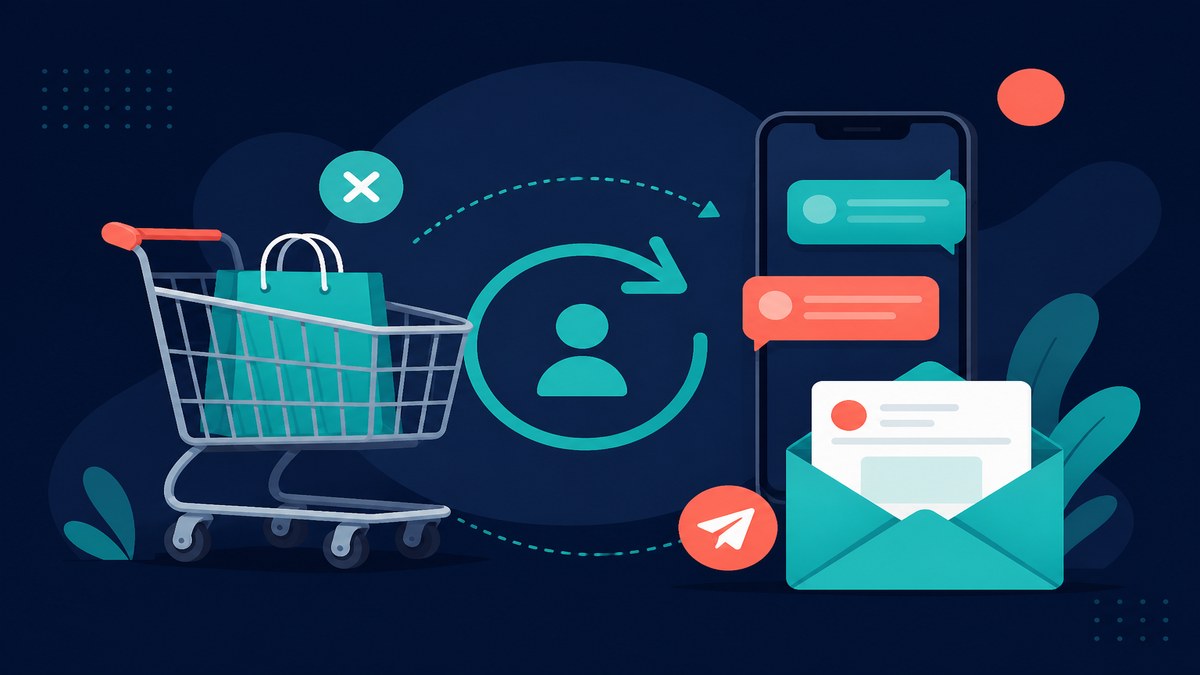
Abandoned cart email is best for detail (products, proof, longer offers). Abandoned cart SMS is best for speed and short reminders. In 2026, teams that orchestrate both in one journey with shared suppression recover more than teams running separate email and SMS silos.
Neither channel “wins alone” if the other keeps messaging after the shopper already bought.
What “abandoned cart” means
An abandoned cart happens when someone adds items (or reaches checkout) and leaves without purchasing. Recovery automation sends reminders with a path back to checkout, then stops when order_completed (or equivalent) fires.
Email vs SMS (practical comparison)
| Dimension | SMS | |
|---|---|---|
| Strength | Detail, images, longer copy | Speed, attention, short CTA |
| Typical job | Remind + explain + social proof | Nudge + direct link |
| Risk if overused | Ignored in inbox | Unsubscribes / fatigue |
| Best early use | Broader reachable audience | Opted-in mobiles only |
Industry write-ups often cite higher open/response speed for SMS and richer content for email. Treat those as directional — measure on your own store.
A simple coordinated journey
- Trigger:
cart_abandoned(or segment: abandoned + no purchase) - Wait a short period (hours, not seconds, unless transactional)
- Email #1: items left + clear checkout link
- Wait / wait-for-event: exit if purchased
- SMS (if opted in): short reminder + link — only if still inactive
- Optional later email: proof or light incentive — still with purchase exit
Suppression rules (non-negotiable)
- If the shopper purchases, exit the whole journey (email and SMS)
- Do not stack independent “email series” and “SMS series” that cannot see each other
- Keep SMS count low; protect trust
What to put in the first messages
Email: product names, cart link, shipping clarity, one primary CTA.
SMS: under a short length, name optional, one link, no essay.
Draft with AI if you want — approve before send. Automation without an exit rule creates refund and trust debt.
Iran / local channel notes
If you sell in Iran, SMS often carries the urgent reminder while email still helps with detail. Use a marketing automation stack that normalizes local mobiles and connects to local SMS providers. Leadara supports email + SMS + web push journeys with Iranian number normalization and providers such as Kavenegar or Nikaline, driven by your events and segments.
FAQ
Is SMS better than email for abandoned carts?
SMS is often faster to notice; email usually carries more context. Combined with one exit rule beats either alone.
When should the first message go out?
Soon enough to stay relevant, late enough to avoid interrupting active checkout. Many teams start in hours, then adjust from journey analytics.
Should every reminder include a discount?
No. Lead with reminder and clarity; keep incentives for later touches if needed.
What events do I need?
At minimum: cart abandon (or checkout start) and purchase completed — so the journey can enter and exit correctly.
Checklist
- Cart + purchase events in your catalog
- One segment you can explain in one sentence
- Email template + optional SMS template
- Shared exit on purchase
- Run history reviewed before adding more branches
Bottom line
Ask “email or SMS?” only after you have one journey, two channels max, one suppression rule. That is the marketing-automation pattern worth copying — not louder blasts.