Action-path first-match vs ranked window: advance on first event or wait and pick the top path
First-match vs ranked evaluation windows in journeys: when you advance, who wins, with tables and FAQ.

Sara Moradi
Designs customer journeys and marketing automation campaigns for retention and lower churn.
September 24, 2026 · 6 min read
Also available in فارسی
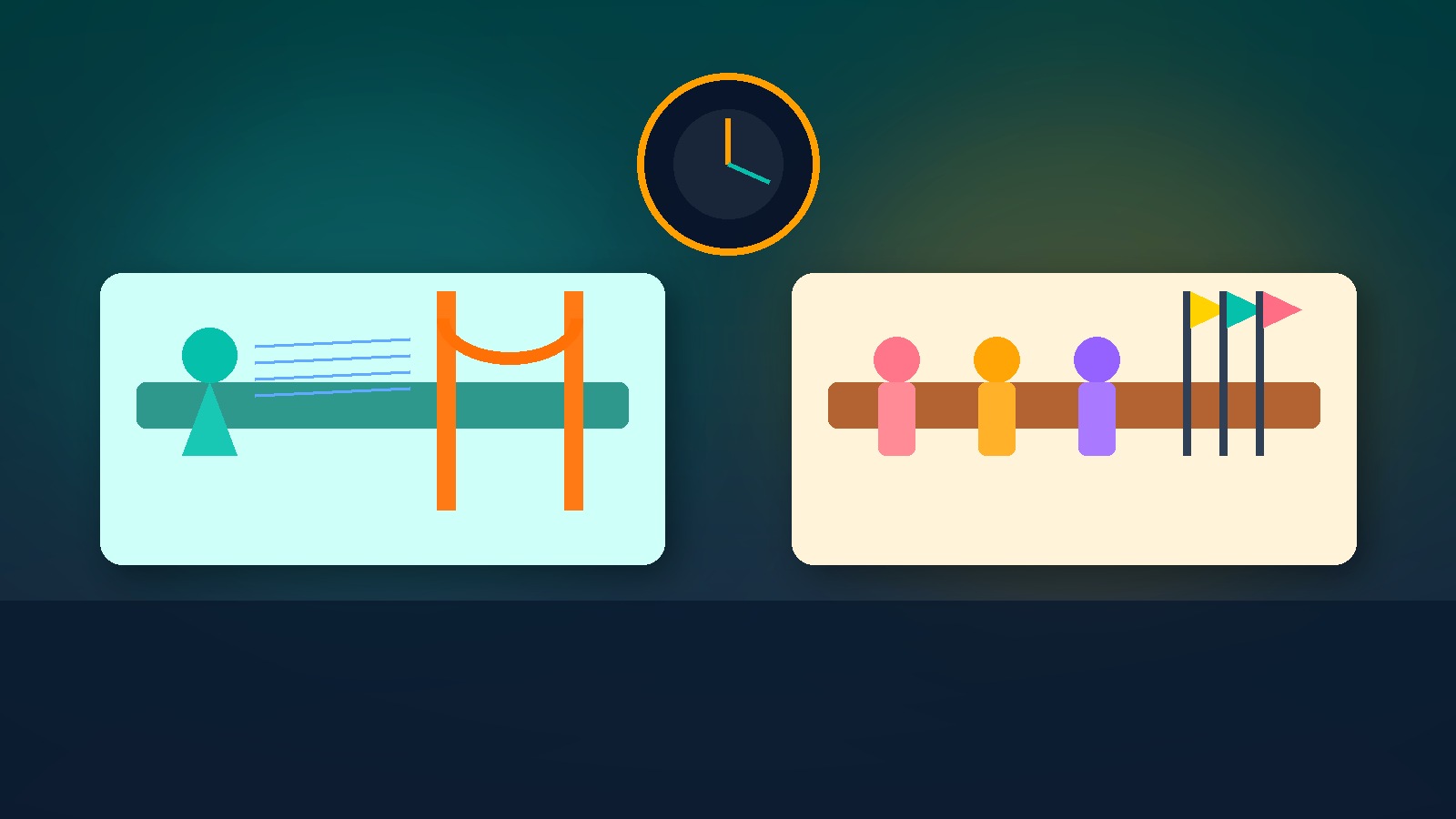
First-match advances the user on the first qualifying event inside the evaluation window; ranked mode holds everyone until the window ends, then routes them down the highest-priority path they still qualify for.
What is the difference between action-path first-match and a ranked window?
When a journey must watch several signals at once—purchased, finished a session, asked for help—you usually build a wait/split block. The real design question is: advance as soon as any signal fires, or wait until the window closes and pick the most valuable path?
That is first-match versus a ranked evaluation window. Both listen to events; they differ in when you decide and who wins if more than one path qualifies.
How does each mode work?
First-match
The user enters the evaluation window. The first event that matches a path advances them immediately and closes the window for that trip. Near-simultaneous events usually resolve by processing order—not by business priority.
Ranked window
The user stays until the window ends—even if a qualifying event arrives early. At the end, the system inspects every still-qualified path and picks the highest configured priority (1, then 2, then 3…). If nothing matched, they take the Everyone Else path.
| Dimension | First-match | Ranked window |
|---|---|---|
| When they advance | First qualifying event | End of window |
| If several paths match | Usually first processed | Highest configured priority |
| Best for | Fast reactions (purchase, cancel) | Best-branch selection after collecting signals |
| Risk | A cheap signal burns a better path | Intentional delay; “stuck in wait” optics if the window is long |
| Everyone Else | No listed event fired | No priority path won by window end |
Read this next to trigger split vs conditional split: that post is about event payload vs profile history; this one is about timing policy and path priority.
Concrete examples
Fashion ecommerce — 24h after cart update
Paths: (1) order_completed → SMS thank-you + receipt email, (2) checkout_started without purchase → payment-help email, (3) re-view same SKU → “still in stock”, (4) Everyone Else → classic cart SMS.
First-match can send path 3 if they browse again before buying. A ranked 24h window lets a later purchase claim path 1 and suppresses the useless reminder.
EdTech SaaS — 7-day onboarding
Paths: profile complete, first lesson, sales-demo request. Short ranked windows (12–48h) often beat first-match so you pick the best progress signal. Cancellations and chargebacks should stay first-match so nurture stops immediately.
When to choose which
- Late messaging is dangerous → first-match.
- Several related signals, one clearly more valuable → ranked with explicit priorities.
- Windows longer than a few days need product/support alignment on “in journey but silent”.
- Do not reshuffle ranks after go-live without a new version.
- Always define a safe Everyone Else path.
Leadara mapping (events, segments, journeys, email/SMS)
Build this with Leadara primitives only:
- Events: bind each path to stable event names.
- Journeys: wait/branch that either advances on first event or evaluates at window end.
- Segments: helpers and Everyone Else filters—not a substitute for ranking policy.
- Email / SMS: separate creative per branch; SMS for urgent paths, email for explanatory ones.
If you are still choosing between “wait for a signal” and “wait for a clock”, start with wait until event vs fixed delay.
Common mistakes
- Equal priority for purchase and browse under first-match.
- 31-day cart windows that pollute “in journey” reports.
- Silent rank edits mid-campaign.
- Empty Everyone Else.
- Assuming near-simultaneous events resolve “fairly”.
One-line takeaway
First-match = interrupt on first matched event; ranked = barrier until window end, then max(priority ∩ matched).
Next step
Open a live journey that already ORs several events. Ask: what if the low-value signal arrives first? If that answer is painful, switch to ranked priorities and keep the window short.
FAQ
If they purchase mid-ranked-window, when do they get the purchase message?
Usually after the window ends—unless a separate conversion exit removes them earlier.
Can we change ranks after publish?
Often technically yes; analytically risky. Version the journey.
Is Everyone Else “no events at all”?
Anyone who did not win a priority path by decision time—including people who fired unrelated events.
OTP / transactional SMS?
Do not put sensitive transactional sends in a ranked competition with nurture.
How is this different from multi-branch split shape?
Graph shape vs evaluation-timing policy. Different layer.
Very short windows (5 minutes)?
Behaves like first-match with a small race buffer.
Where do ranked users sit in analytics?
Often in wait/pending until decision; align “entered path” definitions with data.
Step-by-step for growth
- List three candidate events with plain-language value.
- Lock priorities 1–3 and Everyone Else.
- Agree the window with product.
- Build wait + event branches in Leadara; split email/SMS creatives.
- Test weird event orders on ten profiles.
- Freeze path-share and conversion metrics for two weeks post-launch.
Versus a simple conditional split
Conditional splits decide on current profile state. Action-path windows decide on future event streams. Mixing the two is a common root cause of “segment looks broken” tickets.
Metrics to watch
- Path-1 share vs Everyone Else
- Mean time-to-decision (ranked should hug window length)
- Post-purchase junk-message rate
- Support complaints about mistimed sends
Product + data note for the ticket
Write one line: policy=ranked, window=24h, priority=order>checkout>browse, channels=SMS@1 email@2/3. That beats a ten-page debate.
Programmer-shaped priorities
on event in window:
  if mode == first_match:
    advance(first_matching_path(event)); close_window()
  else:
    matched.add(paths_for(event))
on window_end (ranked only):
  advance(max_priority(matched) or everyone_else)
Guards: version rank changes; agree practical window length; always define a safe Everyone Else.
Acceptance tests before publish
- Profile A only browses → path 3 or Everyone Else as designed.
- Profile B browses then purchases inside the window → ranked mode must prefer purchase.
- Profile C fires nothing → Everyone Else.
- Profile D near-simultaneous events → log processing order under first-match.
- Review each branch creative for post-purchase embarrassment.
Reporting language for PMs
Say “ranked 24h window intentionally delays so purchase outranks browse,” not “the system is slow.”
## Related reading
- Trigger split vs conditional split: this event’s data vs the profile’s history
- Wait until event vs fixed delay: pause for a signal vs pause for a clock
- Jump-to goal vs if/else branch: skip ahead on outcome vs fork the path